Palau Güell is the townhouse Antoni Gaudí designed for the industrialist Eusebi Güell on Carrer Nou de la Rambla, a narrow street off La Rambla in El Raval. You can see its iron-gated facade free from the street in a few minutes, or buy a ticket to go inside for the stables, the domed central hall and the chimney-covered rooftop.
Key takeaways
- Palau Güell is a Gaudí mansion in Barcelona's old town, a short walk from La Rambla. It is not the same place as Park Güell, the hilltop park in the north of the city.
- From the street you see the stone facade, the two arched entrances and the wrought-iron gates. That takes five to ten minutes and costs nothing.
- Inside, the highlights are the brick-vaulted stables in the basement, the tall central hall under a pierced dome, and the rooftop with its mosaic-covered chimneys.
- Ticket prices and opening hours are set by the building's managers. Check the official Palau Güell website before you go.
- Two of our walking tours pass Palau Güell on the way from La Rambla through El Raval to Montjuic Castle: EUR 95 per person for 4 hours, and EUR 105 per person for 6 hours with the Magic Fountain show. Neither includes entry to Palau Güell.
- An interior visit makes a good indoor slot on a wet morning, because most of what matters is under a roof.
What is Palau Güell?
Palau Güell (Güell Palace) is a family residence that Gaudí built for Eusebi Güell, the textile industrialist who became his most important patron. It is one of Gaudí's early major commissions, finished long before Casa Batlló, Casa Milà or the later work on Sagrada Familia. The same partnership later produced Park Güell, which is why the two names are so easily confused.
The house was designed to impress. Güell used it for receptions, concerts and family life, and Gaudí gave him a building that feels closer to a small fortress than a home from the outside, then opens up into a tall, dark, richly decorated interior. The palace is now owned and run by the provincial government, the Diputació de Barcelona, which publishes visiting information on its official site.
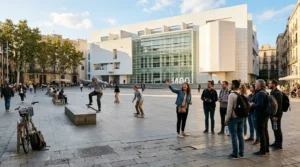
The street matters too. Carrer Nou de la Rambla runs from La Rambla into El Raval, a dense, mixed neighbourhood that looks very different from the polished Gothic Quarter on the other side. The building feels tucked away: you can walk La Rambla many times and never notice it.
Is Palau Guell the same as Park Guell?
No. They share a patron and an architect, and that is about all. The difference is easy to remember once you know what each one is.
- Palau Güell is a townhouse in El Raval, a few steps from La Rambla. It is an interior visit: rooms, stairs, a central hall and a rooftop. It works as a stop on an old-town walk.
- Park Güell is a large hillside park above the Gràcia district, with the mosaic terrace, the serpentine bench and the gatehouses. It is mostly outdoors and needs its own half day or a tour with transport.
If someone has told you to "see Güell" in Barcelona, they almost always mean Park Güell. If you are already walking La Rambla and want a Gaudí building without leaving the old town, Palau Güell is the one in front of you.
What can you see from the street without a ticket?
This is the part most guides skip, and it is what many visitors with a short stay actually do.
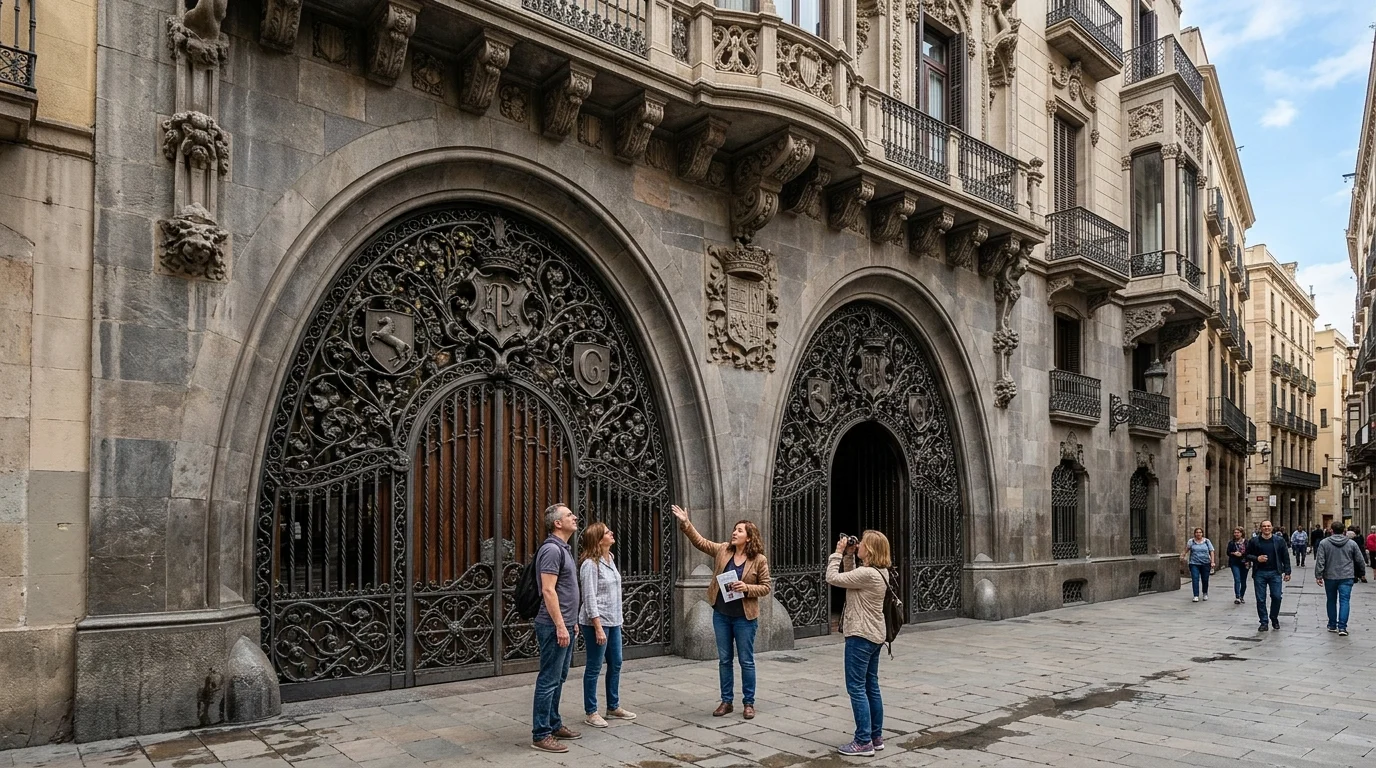
Stand on the opposite side of Carrer Nou de la Rambla and look up. The facade is flat, grey stone, much more severe than Gaudí's later houses. At street level there are two large arched doorways, wide enough for horse-drawn carriages to enter. Each one is closed by a gate of twisted wrought iron, and the ironwork is the detail people photograph most: coiled, almost organic shapes worked into black metal. Between the two arches is an elaborate iron crest that carries the Catalan coat of arms.
Above the doors, look for the long gallery of narrow windows and the grilles that let light in while keeping the street out. The building rises straight up from a pavement so narrow that you have to lean back to take it in. On a bright day the iron throws shadows across the stone.
What you cannot see from the street is the roof. The chimneys that make the palace famous sit well back from the facade, and the street is too narrow to catch them from below. If the rooftop is the reason you came, you need a ticket.
How long to stop: five to ten minutes is enough to look at the gates, take photos and understand what the building is. Our walking tours treat it the same way: a stop outside, not a visit inside.
What is inside Palau Güell, floor by floor?
If you decide to go in, the visit runs from the basement to the roof. The order below follows the way most visitors move through the building.
The stables in the basement
Carriages came in through the arched gates and horses went down a ramp to the basement stables. The ceiling is held up by thick, mushroom-shaped brick pillars that spread out at the top like the heads of trees. It is dim, cool and very solid, and it is one of the clearest places to see how Gaudí used plain brick as a design material rather than hiding it.
The entrance and the main staircase
Back upstairs, a grand staircase leads to the main floor. The materials change here: polished stone, carved wood and metalwork take over from the bare brick below. Look up at the carved ceilings.
The central hall and the dome
This is the heart of the building. The main hall rises through several floors to a dome pierced with small round openings. Light comes through them in points, so the ceiling looks like a night sky. The hall was used for gatherings and music, and an organ sits in the space. Around it are smaller reception rooms with screens, balconies and galleries looking down into the hall, so guests could watch from above.
The family rooms
The upper floors held the private rooms: bedrooms, a dining room and spaces for the family's day-to-day life. They are quieter than the hall and help you picture the house as a home rather than a museum.
The rooftop and the chimneys
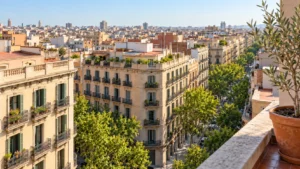
The rooftop is the part people remember. A cluster of chimneys and ventilation towers stands on the roof, most of them covered in trencadís, the broken-tile mosaic that later became a Gaudí signature. Each one has a different pattern and colour, and together they look like a small sculpture garden. A taller spire in the middle sits above the central dome. From up here you look across the rooftops of El Raval towards Montjuic.
Access to the rooftop can depend on the weather and on the building's own rules on the day, so check the official Palau Güell website if it is the main reason for your visit.
How long do you need for Palau Güell?
Plan your time around what you want from it.
- From the street: five to ten minutes.
- Inside, at a normal pace: allow around an hour for the stables, the hall, the family floors and the rooftop. People who read every panel or love architecture often take longer.
- Inside plus La Rambla: two hours covers the interior visit and a slow walk along La Rambla and the Boqueria entrance nearby.
Timed tickets, opening days and last-entry times are set by the building's managers and can change by season. Check the official Palau Güell website for the current details before you plan your morning around it.
Is Palau Guell worth visiting?
For most people, yes, but how much depends on how many days you have and what you have already booked.
It is worth going inside if:
- You have three days or more and have already planned Sagrada Familia and Park Güell.
- You like interiors, craftsmanship and seeing how a building works rather than just how it looks.
- You want a Gaudí visit that is in the old town, so you can combine it with La Rambla, El Raval or the Gothic Quarter without crossing the city.
- You want an indoor plan for a rainy morning.
It is fine to see it from the street only if:
- You have one or two days and need to choose between bigger names.
- You are already paying for one Gaudí interior, such as Casa Batlló or Casa Milà, and do not want a second house the same day.
- You are passing on a guided walk anyway and mainly want to know what it is.
It does not have the colourful facade of Casa Batlló, so it photographs less well from outside, but the interior shows a side of Gaudí that the later houses do not: darker, heavier and more about space and light than colour.
Palau Güell, Casa Batlló or Casa Milà: which should you pick?
If you only have time for one Gaudí house interior, this is the real choice.
- Palau Güell is the early Gaudí: stone, iron and dark wood, with the mosaic chimneys as the burst of colour. It sits in El Raval and fits an old-town day.
- Casa Batlló is the colourful, flowing facade on Passeig de Gràcia, with a bright interior and a famous rooftop.
- Casa Milà (La Pedrera) is next to it on the same avenue, with the wave-shaped stone facade and a rooftop of sculpted chimneys.
A simple rule: if your other plans for the day are in the old town, Palau Güell is the convenient choice. If they are in the Eixample, choose one of the Passeig de Gràcia houses. For a side-by-side look at those two, read which Gaudí house to visit, Casa Batlló or Casa Milà.
You can also see the outside of Casa Batlló and Casa Milà on a guided walk without buying either ticket. Gaudi's Modernist Legacy Walking Tour costs EUR 50 per person for 3 hours, with a maximum of 15 people. It meets in central Barcelona and walks through the Eixample past Casa Batlló and Casa Milà to the exterior of Sagrada Familia. Facades are seen from outside, and monument entry tickets are not included. That route is in the Eixample and does not pass Palau Güell.
Which tours pass Palau Güell, and do they go inside?
Two of our walking tours walk past Palau Güell. Neither one goes inside, and neither includes a Palau Güell ticket. Your guide stops in front of the facade, explains what the building is and what is behind the gates, and then the group carries on through El Raval.
| Tour | Price | Duration | Max group | Palau Güell | Other Gaudí sights on the route |
|---|---|---|---|---|---|
| Barcelona Old Town, Montjuic Castle and Cable Car | EUR 95 per person | 4 hours | 15 people | Passed and seen from the street, no entry | None |
| Barcelona Old Town, Montjuic Castle, Cable Car and Magic Fountain show | EUR 105 per person | 6 hours | 15 people | Passed and seen from the street, no entry | None |
| Gaudi's Modernist Legacy Walking Tour | EUR 50 per person | 3 hours | 15 people | Not on the route | Casa Batlló and Casa Milà from outside, Sagrada Familia exterior |
All three are walking tours priced per person. They meet in central Barcelona and use no vehicle or hotel pick-up.
The 4-hour Montjuic route
Barcelona Old Town, Montjuic Castle and Cable Car starts on La Rambla, stops briefly at the entrance of La Boqueria market and passes the Gran Teatre del Liceu. From there it turns into Carrer Nou de la Rambla for Palau Güell, then walks through El Raval. The second half goes uphill without the climb: the funicular and the cable car take the group up Montjuic to the castle, and round-trip tickets for both are included. At the top you visit Montjuic Castle and climb the tower for views over the city and the sea, then ride the cable car back down.
The 6-hour version with the Magic Fountain
Barcelona Old Town, Montjuic Castle, Cable Car and Magic Fountain show follows the same old-town start past Palau Güell and adds a photo stop at Fernando Botero's bronze cat in El Raval. After the castle it stops to view the Olympic Stadium and Palau Sant Jordi, and it ends with the Magic Fountain show at the foot of Montjuic. The show is run by the city council. It is seasonal and can be paused for maintenance or wind, and when that happens the rest of the tour goes ahead.
How to combine Palau Güell with La Rambla and El Raval
If you are walking on your own, Palau Güell slots naturally into a short old-town loop. A route that works:
- Start on La Rambla near Plaça de Catalunya and walk downhill.
- La Boqueria: stop at the market entrance for a look, or go in if you are hungry.
- Gran Teatre del Liceu: the opera house sits on La Rambla a little further down.
- Turn into Carrer Nou de la Rambla just past the Liceu. Palau Güell is a short way along.
- El Raval: carry on into the neighbourhood's streets, or loop back to La Rambla and cross into the Gothic Quarter.
- Montjuic: from the lower end of El Raval and the Paral·lel, the funicular is the easy way up to the hill and the castle.
That sequence is the same direction the Montjuic walking tours take, which is why a guided walk is a simple way to cover it if you would rather not navigate. If you go inside Palau Güell, do it before the walk or on a different morning: an interior visit does not fit inside a group tour that keeps moving.
How Palau Güell fits a two to four day plan
Where it goes in your trip depends on how long you have.
- One or two days: see Palau Güell from the street. Spend your ticketed time on Sagrada Familia and Park Güell, and let a walking route take you past Palau Güell on the way to something else.
- Three days: this is where an interior visit starts to make sense. Put it on your old-town day, in the morning, and walk La Rambla, El Raval or the Gothic Quarter afterwards.
- Four days or more: go inside, and add one of the Passeig de Gràcia houses on a different day so you can compare early and later Gaudí.
For a full day-by-day plan with Gaudí, the old town and a day trip, read three days in Barcelona.
Is Palau Güell a good rainy-day visit?
Yes, mostly. The stables, the staircase, the central hall and the family rooms are all indoors, so rain does not change much of the visit. The rooftop is the exception: it is open air, and access can be affected by the weather. If the rooftop is your priority, keep the visit flexible and check the official Palau Güell website on the day.
A wet morning inside Palau Güell, followed by a covered lunch at La Boqueria, is a sensible way to use a rainy day in the old town. For tours that still work when the forecast turns, see Barcelona tours that work in the rain.
If you book one of our tours and the weather looks bad, you can cancel for free or change your date for free up to 96 hours before the tour starts. Refunds go back to the original payment method within a few business days. A no-show is not refunded.
Practical notes before you go
- Tickets and hours: prices, opening days, timed entry and last entry are set by the palace's managers. Check the official Palau Güell website rather than relying on numbers you find elsewhere.
- Getting there: the palace is on Carrer Nou de la Rambla, a short walk from La Rambla near the Liceu.
- Stairs: the visit runs across several floors, including the basement and the rooftop. If stairs are a concern, ask the palace directly about access before you buy a ticket.
- Combine sensibly: pair Palau Güell with La Rambla, El Raval and the Gothic Quarter rather than with another Gaudí house on the same morning.
- On a tour: if you are on one of the Montjuic walking tours, you see the facade and hear the story, but you do not go in. Plan an interior visit separately if you want one.
Conclusion
Palau Güell is the Gaudí building most visitors walk past without knowing it. Five minutes on Carrer Nou de la Rambla gives you the gates and the facade for free. An hour inside gives you the stables, the domed hall and the rooftop chimneys, and it is a strong choice on a third day or a rainy morning. If you would like to see it on the way from La Rambla through El Raval to Montjuic Castle, browse all our tours or message us on WhatsApp at +34 632 93 79 41, and we will help you pick a date.