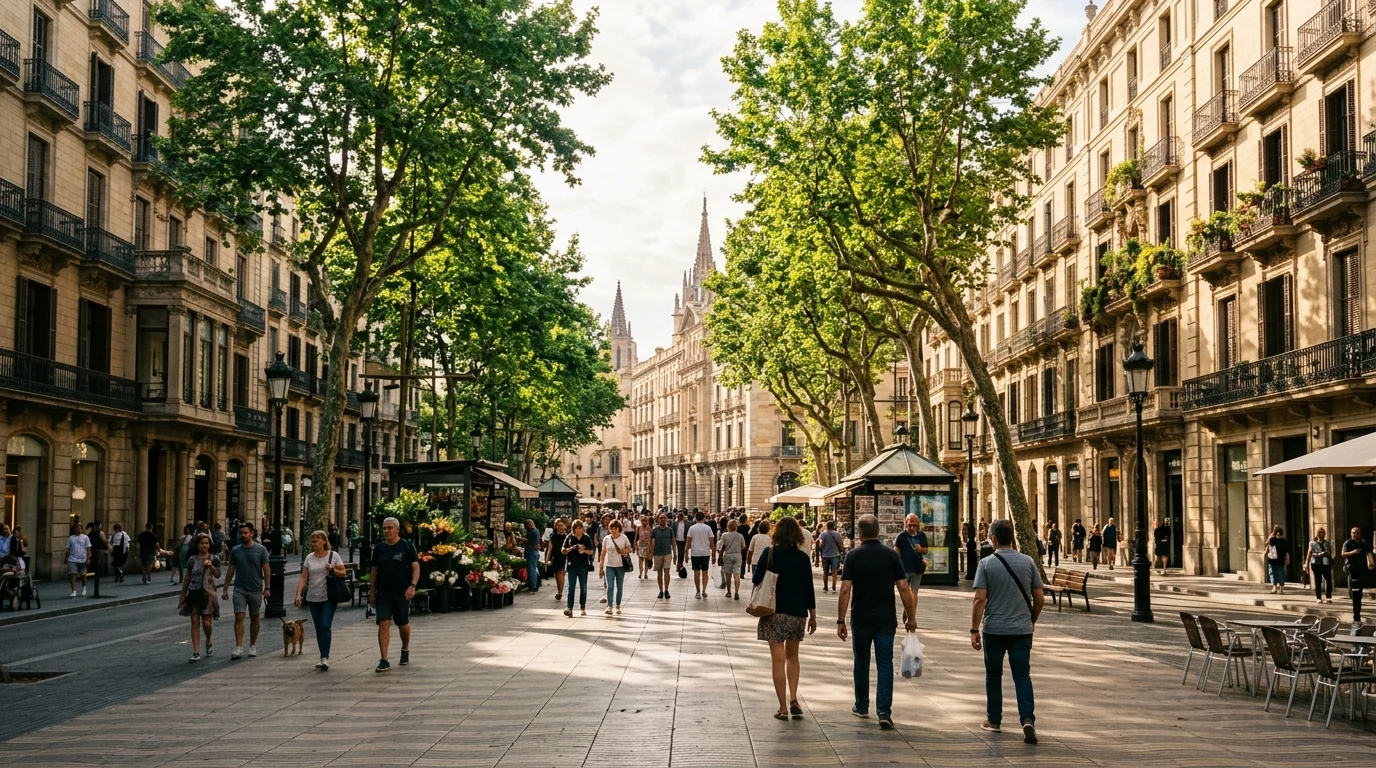
La Rambla is the tree-lined promenade that runs from Placa de Catalunya down to the Columbus Monument and the old port. A slow walk end to end takes well under an hour, longer with a stop at La Boqueria. It is worth seeing once, early in the day, with your bag zipped and your eyes on the details underfoot.
Key takeaways
- La Rambla links Placa de Catalunya with Port Vell and the Columbus Monument, with the Gothic Quarter on one side and El Raval on the other.
- The landmarks most people miss are small: the Canaletes fountain, the Miro pavement mosaic at Pla de l'Os, the dragon on Casa Bruno Cuadros and the lamp posts in Placa Reial.
- La Boqueria market opens straight off the street. Go early, and treat the stalls nearest the entrance as the busiest and dearest.
- Pickpockets work the crowds. Keep valuables in front of you and walk past street games.
- Two walking tours named in the price list walk La Rambla: the Barcelona Old Town Walking tour with Tapas and Flamenco Show (EUR 105 per person) and the Barcelona Old Town Port and Boat trip (EUR 80 per person).
- The La Boqueria and Santa Caterina Markets with Food and Tapas Small Group tour (EUR 135 per person) takes you into the market with tastings included.
- Every tour can be cancelled or moved to another date free of charge up to 96 hours before it starts.
What is La Rambla, and is it worth visiting?
La Rambla is one long street made of several shorter ones. Locals often say Las Ramblas, in the plural, because each stretch has its own name: Rambla de Canaletes at the top, then Rambla dels Estudis, Rambla de Sant Josep (where La Boqueria sits), Rambla dels Caputxins and Rambla de Santa Monica at the sea end.
A wide pedestrian strip runs down the middle under plane trees, with traffic lanes on both sides. Kiosks, flower stalls and cafe terraces line the central walk. On either side, narrow streets lead into the Gothic Quarter to the east and El Raval to the west.
Is it worth visiting? Yes, once, and with the right expectations. La Rambla is not a hidden corner. It is one of the busiest streets in central Barcelona, and many of the businesses on it exist for visitors. What makes it worth the walk is its position, because it threads the old city together, and a handful of landmarks along the way that are easy to walk past without noticing.
La Rambla stop by stop, from Placa de Catalunya to the sea
The natural direction is downhill, from Placa de Catalunya towards the port. Here is what you pass, in order.
Placa de Catalunya and the Canaletes fountain
The walk starts at the large square that marks the edge of the old city. A few steps into La Rambla stands the Font de Canaletes, a cast iron fountain with several lamps on top. Local legend says that anyone who drinks from it will come back to Barcelona. It is also where football fans gather to celebrate when the city's club wins a title.
Rambla dels Estudis and the upper stretch
The upper part of the street is quieter than the middle. It takes its name from a university that once stood here. Look up at the facades: several buildings along this stretch carry carved stone and iron balconies that the crowds at street level rarely notice.
La Boqueria, on Rambla de Sant Josep
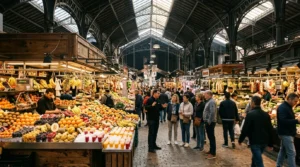
The iron and stained glass entrance of the Mercat de Sant Josep, known to everyone as La Boqueria, opens on the right as you walk down. It is the city's central food market. Fruit, cured ham, seafood, olives and sweets fill the stalls, and small counter bars inside serve food cooked to order.
Pla de l'Os and the Miro mosaic
Just below La Boqueria, at the small open space called Pla de l'Os, the pavement changes. A circular mosaic by Joan Miro is set into the ground, in his familiar primary colours and bold shapes. Crowds walk across it all day without looking down. Stop in the middle of the street and you will see it clearly.
Casa Bruno Cuadros, the umbrella house
On the corner opposite the Miro mosaic stands Casa Bruno Cuadros. The building was once an umbrella shop, and its facade still carries open umbrellas, Japanese style fans and Egyptian motifs. A green Chinese dragon holding a lantern curls round the corner of the building. It is one of the most photographed facades on the street, and one of the easiest to miss if you keep your eyes at shop level.
The Liceu opera house
A little further down, on Rambla dels Caputxins, is the Gran Teatre del Liceu, the opera house of Barcelona. Its street front is modest compared with the interior, which is known for its red and gold auditorium. The Liceu metro stop takes its name from it.
Placa Reial and the Gaudi lamp posts
Turn left through an archway on the lower half of the street and you step into Placa Reial, an arcaded square with palm trees and a central fountain. The ornate lamp posts are early works by Antoni Gaudi, designed long before Sagrada Familia made him famous. The square is lined with bars and restaurants and stays lively late into the night.
Palau Guell, just off the street
On the opposite side, a few steps down Carrer Nou de la Rambla, is Palau Guell, the townhouse Gaudi designed for his patron Eusebi Guell. You see the heavy iron gates and the parabolic arches from the street. It is a short detour that shows a darker, more Gothic side of Gaudi than the colourful buildings of the Eixample.
Rambla de Santa Monica and the Columbus Monument
The last stretch widens and grows calmer. Portrait artists and craft stalls sometimes set up here. At the end the Columbus Monument rises from a roundabout, with the statue on top pointing out to sea. Beyond it is Port Vell, the old harbour, and the wooden walkway known as the Rambla de Mar that carries the promenade out over the water.
La Boqueria: when to go and what a market tour does differently
La Boqueria is the stop most people plan around, and the one that disappoints most often when it is done badly. The stalls nearest the La Rambla entrance sell the most photogenic items to the biggest crowds: fruit cups, juices and cones of ham. The further in you go, the more the market looks like a place where people from Barcelona actually shop.
Three practical points help:
- Go in the morning. The market is at its fullest and calmest before the late morning rush.
- Check the market's own opening days before you plan around it. Like most food markets it does not open every day.
- Eat at a counter bar inside rather than on a terrace outside. You sit next to the cooks and see what you order being made.
The La Boqueria and Santa Caterina Markets with Food and Tapas Small Group tour takes this a step further. It lasts 4 hours, costs EUR 135 per person and takes a maximum of 15 people. It covers two markets rather than one: La Boqueria, off La Rambla, and Santa Caterina, the market with the wavy coloured roof on the other side of the old town. Tastings are part of the price: 3 pintxos, tapas, a dessert and drinks with the tastings. You can see the full route on the La Boqueria and Santa Caterina market tour page.
If you are deciding between a market tasting and an evening of tapas and flamenco, the comparison of tapas and flamenco or a market tasting sets out how the two days differ.
How long does it take to walk La Rambla, and when should you go?
Walked without stopping, La Rambla takes well under an hour from Placa de Catalunya to the Columbus Monument. Most visitors spend longer, because La Boqueria alone can easily take up a good part of a morning, and the detours to Placa Reial and Palau Guell add more.
The time of day changes the experience more than anything else:
- Early morning. Delivery vans, street sweepers and locals on their way to work. This is the best time to see the facades, the Miro mosaic and Casa Bruno Cuadros without a crowd in the way.
- Late morning to late afternoon. The busiest hours, when tour groups, cruise visitors and shoppers fill the central walk. Pickpockets are most active now.
- Evening. Cooler and calmer in summer, with the terraces lit. Placa Reial comes alive after dark.
A good plan for a first visit is to walk La Rambla early, see La Boqueria while it is fresh, then step into the side streets of the Gothic Quarter before the crowds arrive.
Is La Rambla safe? Pickpockets, street games and where to eat instead
La Rambla is a busy public street, and the main risk is theft rather than violence. Pickpockets work where crowds are thickest: at the top near Placa de Catalunya, around the La Boqueria entrance and near the Liceu metro stop.
Simple habits help:
- Keep your phone and wallet in a front pocket or a bag worn in front of you, zipped.
- Do not leave a phone on a cafe table, even for a moment.
- Be wary of anyone who asks you to sign a petition, offers you a sprig of something, or points out a "stain" on your clothes. These are common distractions.
- Walk past the cup and ball games. The "winners" in the crowd are part of the act.
Where to eat instead
The terraces in the middle of La Rambla are convenient, but they are aimed at passers-by and priced for the location. Large jugs of sangria and set menus with photographs are the usual sign. You will usually eat better by walking a few minutes into the side streets of the Gothic Quarter or El Raval, or by eating at a counter bar inside La Boqueria. This is also one reason a guided food walk is useful: the guide chooses the bars, so you do not have to judge them from the outside.
A short word on the Gothic Quarter
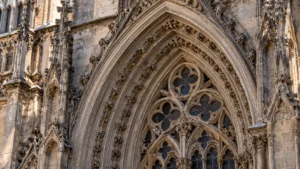
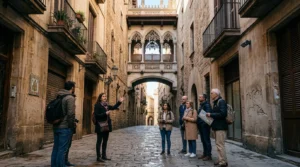
La Rambla forms the western edge of the Gothic Quarter, and most visitors move between the two in the same morning. The Gothic Quarter is a separate experience: narrow lanes, small squares, the cathedral and the remains of the old city walls. It deserves its own time rather than a quick detour.
City Tour in Barcelona runs the Barcelona Old Town and Gothic Quarter Walking Tour for EUR 55 per person. It lasts 3 hours, takes a maximum of 15 people and meets in central Barcelona. To decide whether a guide adds enough for you, read whether a Gothic Quarter walking tour is worth it.
Which guided tours walk La Rambla?
Two walking tours in the City Tour in Barcelona price list include La Rambla in their route, and a third takes you into La Boqueria. All three are walking tours: they meet in central Barcelona, use no vehicle and are priced per person.
| Tour | Price | Duration | Max group | What it adds beyond La Rambla |
|---|---|---|---|---|
| Barcelona Old Town Port and Boat trip | EUR 80 per person | 4 hours | 15 | Gothic Quarter and Las Ramblas on foot, then a harbour cruise to Moll de Llevant and back |
| Barcelona Old Town Walking tour with Tapas and Flamenco Show | EUR 105 per person | 3 hours | 8 | Gothic Quarter and La Rambla, tapas bar stops, a live flamenco show in a tablao |
| La Boqueria and Santa Caterina Markets with Food and Tapas Small Group | EUR 135 per person | 4 hours | 15 | Two markets with 3 pintxos, tapas, a dessert and drinks with the tastings |
| Barcelona Old Town and Gothic Quarter Walking Tour | EUR 55 per person | 3 hours | 15 | A guided walk through the Old Town and the Gothic Quarter |
The Old Town, port and boat trip
The Barcelona Old Town Port and Boat trip walks the Gothic Quarter and Las Ramblas, then continues to the water for a harbour cruise to Moll de Llevant and back. It costs EUR 80 per person, lasts 4 hours and takes up to 15 people. It suits anyone who wants to finish La Rambla the way the street itself finishes, at the sea, and see the city from the harbour. Details are on the Old Town, port and boat trip page.
The tapas and flamenco evening walk
The Barcelona Old Town Walking tour with Tapas and Flamenco Show walks the Gothic Quarter and La Rambla, stops at tapas bars along the way and ends at a live flamenco show in a tablao. It costs EUR 105 per person, lasts 3 hours and is capped at 8 people, the smallest group of the walking tours here. It answers the "where do I eat near La Rambla" question for you. See the tapas and flamenco evening walk for the full route.
The market tour
The La Boqueria and Santa Caterina Markets with Food and Tapas Small Group tour is the choice if La Boqueria is the main reason you want to be on La Rambla at all. It is the most expensive of the walking tours at EUR 135 per person, and the tastings are included in that price.
Walking tour, pick-up tour or private: which suits a first visit?
La Rambla is a walking street, so the walking tours are the natural fit. Still, it helps to know how the three formats compare before you book, because they are priced on different bases.
- Walking tours cost EUR 50 to 135 per person. They meet in central Barcelona, use no vehicle, last 3 to 6 hours and take 8 to 15 people. All the tours that walk La Rambla are in this group.
- Small-group tours with hotel pick-up cost EUR 115 to 195 per person. They include hotel pick-up and drop-off in an air-conditioned vehicle. The 5 hour tours take a maximum of 8 people and the 8 hour tours take up to 18. These tours are built around sights such as Sagrada Familia and Park Guell rather than La Rambla.
- Private Barcelona tours cost EUR 549 to 879 per group, and that price is for the whole group of up to 6, not per person. A private tour collects you from your hotel in a vehicle for your group only. For example, The Essence of Barcelona at EUR 549 shared by a group of 6 works out at EUR 91.50 each; shared by 2 it is EUR 274.50 each.
Do not compare a per-person price with a per-group price directly. Work out the cost for your whole party first.
For a first visit, a sensible split is one walking tour that covers La Rambla and the old town, and one pick-up or private tour for Sagrada Familia and Park Guell on another day. Sagrada Familia tickets are included on some of those tours, always subject to availability.
Cancelling or changing your date
Every City Tour in Barcelona tour can be cancelled free of charge, or moved to a free new date, up to 96 hours before it starts. Refunds go back to the original payment method within a few business days. A no-show is not refunded, so if your plans change, cancel or move the booking before the 96 hour cut-off.
Practical notes before you book
- Footwear. La Rambla itself is flat, but the walking tours continue into the old town on uneven paving. Wear comfortable shoes.
- Meeting point. Walking tours meet in central Barcelona. Confirm the exact spot with the tour team before the day rather than guessing from a map.
- Group size. If you prefer a smaller group, the tapas and flamenco walk is capped at 8. The other walking tours here take up to 15.
- Eating. If you book the tapas and flamenco walk or the market tour, plan a light meal beforehand. Food is part of both.
- Timing. Walk La Rambla on your own early in the morning if you want photographs of the Miro mosaic and Casa Bruno Cuadros without crowds, then join a tour later in the day.
- Valuables. Carry only what you need. A small zipped bag worn in front is enough for a day on foot.
- Combining days. The Barcelona Old Town Port and Boat trip and the market tour both last 4 hours, so either fits a morning or an afternoon with time to spare for a museum or a beach.
Plan your walk down La Rambla
La Rambla is best seen early, on foot, with a few minutes set aside for the details most people walk past. You can browse all tours to compare the walking routes, or send a message on WhatsApp or call +34 632 93 79 41 with any question. You can also email info@citytourinbarcelona.com.