What to eat in Barcelona comes down to a short list of Catalan staples: pa amb tomàquet (bread rubbed with tomato), escalivada, botifarra sausage, seafood rice dishes and fideuà, crema catalana, plus shared tapas and pintxos at the bar. Eat lunch late, dinner later, and order small plates to share so you can try more.
Key takeaways
- Catalan cooking is its own tradition. Pa amb tomàquet, escalivada, botifarra, fideuà and crema catalana are the dishes that set Barcelona apart from a generic Spanish menu.
- Tapas are small plates ordered for the table. Pintxos are single bites, often on a slice of bread and held together with a stick, usually picked one at a time at the counter.
- Barcelona eats late. Lunch is the main meal of the day for many locals, and dinner tends to start well into the evening.
- Some dishes are seasonal. Calçots, the long sweet spring onions grilled over a fire, belong to their own season in late winter and spring, so do not expect them all year.
- Two guided food walks cover most of this list: the La Boqueria and Santa Caterina Markets with Food and Tapas Small Group at EUR 135 per person, and the Barcelona Old Town Walking tour with Tapas and Flamenco Show at EUR 105 per person.
- If you are vegetarian or have an allergy, say so when you book so the guide knows before the day.
What food is Barcelona famous for?
Barcelona is famous for food that is simple on paper and careful in practice: good bread, ripe tomatoes, olive oil, cured pork, fresh fish from the Mediterranean and rice cooked in wide, shallow pans. The city sits between the sea and a farming hinterland, and its cooking reflects both. You will find mountain sausages and slow stews on the same menu as clams, squid and prawns.
Much of the eating happens at a counter. A meal can be three small plates in one bar, a walk, then two more plates somewhere else. That rhythm is why tapas and pintxos come up in every conversation about what to eat here.
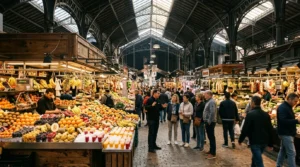
The other thing Barcelona is known for is its markets. La Boqueria, just off La Rambla, is the famous one, and Santa Caterina in the old town is the quieter one where more neighbours do their shopping. We have a separate guide to what to eat at La Boqueria and when to go, so this article stays on the dishes themselves and on how to fit them into your days.
Catalan dishes to try, by type
The easiest way to plan is by dish family. Pick one or two from each group and you will have covered the core of Catalan cooking in a few days.
Bread and starters
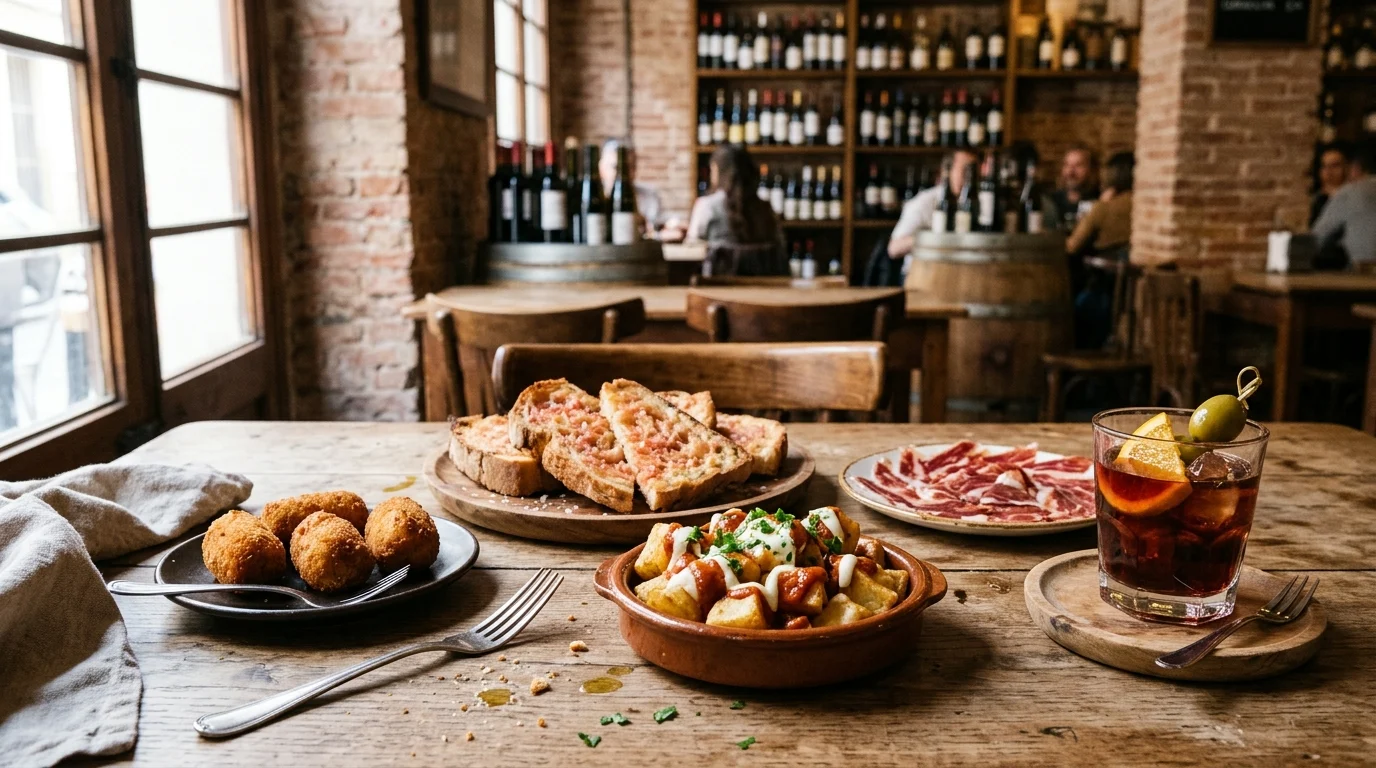
Pa amb tomàquet. This is the dish to start with, and you will see it on almost every table. A slice of bread, often toasted, is rubbed with a cut tomato, then dressed with olive oil and salt. Some places rub garlic on first. It comes alongside cured ham, cheese or anchovies, or on its own. It is the Catalan answer to a bread basket, and locals have opinions about how it should be made.
Escalivada. Peppers, aubergine and onion roasted until soft, usually over embers or in a hot oven, then peeled, cut into strips and dressed with olive oil. It is served cool or at room temperature, sometimes on toast and sometimes with anchovies. It is one of the most useful dishes for vegetarians, as long as you check what is laid on top.
Espinacas a la catalana. Spinach cooked with raisins and pine nuts. The sweet and savoury mix is typical of older Catalan cooking and makes a good side plate between richer dishes.
Cured meats and sausages
Botifarra. The best-known Catalan sausage. Fresh botifarra is grilled and often served with white beans (botifarra amb mongetes), a plain and filling plate that turns up on lunch menus. There are also cured and cooked versions, including a black botifarra made with blood.
Fuet. A thin, dry-cured pork sausage, sliced and eaten as a snack. It is easy to find in markets and travels well, which makes it a common thing to take home.
Jamón. Cured ham is Spanish rather than strictly Catalan, but it is everywhere in Barcelona, with whole legs hanging above market stalls and bar counters.
Rice, noodles and seafood
Paella and arròs. Paella comes from Valencia, south of Catalonia, but rice dishes cooked in a wide pan are a normal part of eating in Barcelona, especially near the sea. Many Catalan menus call them simply arròs (rice), with seafood, with meat or with both. Rice is traditionally a lunch dish here, which is worth knowing if you are planning an evening meal around it.
Arròs negre. Rice cooked with squid or cuttlefish and its ink, which turns it black. It is often served with allioli on the side. It looks dramatic and tastes of the sea.
Fideuà. Made like a seafood paella but with short, thin noodles instead of rice. The noodles crisp slightly at the bottom of the pan. If you only try one dish that feels specific to this stretch of coast, fideuà is a strong choice.
Suquet de peix. A fisherman's stew of fish and potatoes in a saffron and garlic broth. It is less of a showpiece than paella and closer to what people on the coast actually cooked at home.
Allioli. Not a dish but a sauce you will meet constantly: garlic and olive oil worked into a thick emulsion. It comes with rice, grilled meat, potatoes and seafood.
Bar classics you will see on tapas menus
Patatas bravas. Fried potato chunks with a spicy sauce, allioli, or both. The sauce changes from bar to bar.
Tortilla. The Spanish potato omelette, thick and served in wedges. It is a reliable choice at any hour and one of the easier things to find for vegetarians.
Sweets and desserts
Crema catalana. A chilled custard flavoured with citrus peel and cinnamon, with a layer of sugar burnt into a hard crust just before it is served. It looks like crème brûlée, but it is its own dessert with its own history.
Mel i mató. Fresh, soft cheese with honey. It is simple, light and a good way to end a heavy lunch.
What to drink with it
Cava. The sparkling wine made mostly in the Penedes region, west of Barcelona. It is drunk as an aperitif and with food, not only at celebrations.
Vermut. Vermouth before lunch, often on a weekend, is a Barcelona habit. It usually comes over ice with an olive or a slice of orange, sometimes with a few crisps, olives or tinned seafood on the side.
Wine and beer. Catalan wine and local beer are easy to find. Sangria is sold widely, though locals drink it less often than visitors expect.
Tapas vs pintxos: what is the difference?
The two words are often used as if they meant the same thing. They do not, and knowing the difference helps you order.
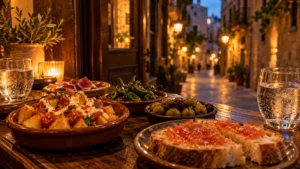
Tapas are small plates, usually ordered from a menu or a board and put in the middle of the table to share. Patatas bravas, croquetes, grilled squid or a plate of escalivada are typical tapas. You order a few, eat, then order a few more. In Barcelona, tapas are paid for like any other dish.
Pintxos come from the Basque tradition in northern Spain. A pintxo is a single bite, very often a slice of bread with a topping held in place by a cocktail stick. They are laid out along the bar counter, and you pick the ones you want. Some bars count the sticks on your plate at the end to work out what you owe, so do not throw them away.
| Tapas | Pintxos | |
|---|---|---|
| What it is | A small plate of one dish | A single bite, often on bread |
| How it is served | Ordered and brought to the table | Usually laid out on the bar counter |
| How you eat it | Shared by the group | One each, picked one at a time |
| Typical setting | Tapas bars and restaurants | Pintxos bars, often standing at the counter |
| How you pay | Per dish ordered | Often per piece, sometimes counted by sticks |
Many Barcelona bars blur the line and serve both. On the market food walk you taste both styles in the same afternoon.
Catalan food vs Spanish food: which dishes are actually Catalan?
Catalonia has its own language, history and cooking. Some dishes in this guide are found all over Spain, and some are proudly Catalan.
Catalan in origin or strongly associated with Catalonia: pa amb tomàquet, escalivada, botifarra, fideuà, suquet de peix, espinacas a la catalana, crema catalana, mel i mató, calçots, allioli as a standard side, and cava.
Found across Spain and common in Barcelona: tortilla, jamón, patatas bravas, croquetes, and paella, which belongs to Valencia but is cooked all along the coast.
From elsewhere in Spain but easy to find here: pintxos, which come from the Basque Country, and flamenco, which comes from Andalusia in the south. Neither is Catalan, but both are part of what a visitor to Barcelona can enjoy in the evening.
If you want a menu that feels truly local, look for words in Catalan rather than Spanish on the board: arròs rather than arroz, botifarra rather than butifarra, pa amb tomàquet rather than pan con tomate.
What time do people eat lunch and dinner in Barcelona?
Meal times in Barcelona run later than in most of northern Europe and North America, and adjusting to them makes eating out much easier.
Breakfast is usually light: a coffee and a pastry or a small sandwich, often at a bar.
Lunch is the main meal for many locals. It typically starts in the early afternoon, often somewhere around two o'clock, and can run long. Many restaurants offer a set lunch menu on weekdays with a starter, a main course, a dessert and a drink.
The evening begins with a drink and a few small plates. This is when tapas bars are busiest and when many visitors find it easiest to try several dishes.
Dinner rarely starts early. Locals tend to sit down late in the evening, and kitchens that serve full dinners often get busy later than visitors expect.
A practical approach: eat a proper lunch, treat the early evening as tapas time, and keep dinner light if you are not used to eating late. Hours vary from place to place, so check with the venue.
Which Barcelona dishes are seasonal?
Most of the dishes above are available all year. A few are tied to particular times.
Calçots. These long, mild spring onions are grilled over a hot fire until the outside chars, then wrapped in newspaper to steam. You peel off the black layer and dip the soft centre into romesco sauce, made with roasted peppers, nuts and garlic. Eating them is a messy, social event called a calçotada, and the calçot season falls in late winter and spring. It is a reason to visit in that part of the year, but plan around the season rather than a fixed date.
Lighter food in summer, heavier in winter. Cold dishes and seafood feel natural in the hot months, while stews and bean dishes suit the cooler ones.
If you are travelling in winter, the good news is that the classic tapas, sausages, rice dishes and pastries are all still on offer.
What should vegetarians look for?
Catalan cooking uses a lot of pork and seafood, but vegetarians can still eat well with a little planning.
Dishes that are often meat free: pa amb tomàquet, escalivada, espinacas a la catalana, tortilla, patatas bravas, roasted vegetables, grilled calçots in season, mel i mató and crema catalana. Always ask, because toppings, stocks and sauces vary and anchovies or ham can appear on dishes you might expect to be plain.
On a guided food walk, the tastings follow the stops on the route. If you are vegetarian, vegan, or have an allergy or intolerance, tell us when you book so the guide knows in advance. Do not assume a set tasting can be changed on the day without notice.
Should you taste on your own or on a guided food walk?
Both work, and they suit different travellers.
On your own you choose every bar and plate and set your own pace. The trade-off: menus in Catalan, pintxos-counter habits and late meal times can make the first evening feel like guesswork.
On a guided walk a local guide chooses the stops, explains what you are eating and handles the ordering. You also learn the old town as you walk between stops. The trade-off is that the stops and tastings are set in advance.
A sensible plan for a first visit is to do one guided food walk early in your trip, then use what you learned to eat independently for the rest of your stay. We compare the two formats in more depth in our article on choosing a tapas and flamenco tour or a market tasting.
How the two food walks cover what to eat in Barcelona
City Tour in Barcelona runs two walking tours built around food. Both are walking tours: they meet in central Barcelona and use no vehicle or hotel pick-up. Both are priced per person.
| Tour | Duration | Max group | What is included to eat and drink | Price |
|---|---|---|---|---|
| La Boqueria and Santa Caterina Markets with Food and Tapas Small Group | 4h | 15 | 3 pintxos, tapas, a dessert and drinks with the tastings | EUR 135 per person |
| Barcelona Old Town Walking tour with Tapas and Flamenco Show | 3h | 8 | Tapas bar stops, then a live flamenco show in a tablao | EUR 105 per person |
La Boqueria and Santa Caterina Markets with Food and Tapas Small Group
This is the daytime option and the one that covers the widest range of the dishes in this guide. Over 4 hours you visit two markets, La Boqueria and Santa Caterina, and the tastings include 3 pintxos, tapas, a dessert and drinks. Groups are capped at 15 people. It costs EUR 135 per person, which puts it at the top of the walking-tour price range of EUR 50 to EUR 135 per person.
Choose it if your main interest is food itself: you want to see the produce, taste pintxos and tapas side by side, and finish with something sweet. It is also the best way to understand the tapas vs pintxos question in practice. Details and booking are on the La Boqueria and Santa Caterina market food tour page.
Barcelona Old Town Walking tour with Tapas and Flamenco Show
This is the evening option. Over 3 hours a guide walks you through the Gothic Quarter and along La Rambla, with stops at tapas bars, and the tour ends at a live flamenco show in a tablao. Groups are small, with a maximum of 8 people. It costs EUR 105 per person.
Choose it if you want tapas as part of a night out rather than a full food tour, and you like the idea of combining the old town, a few small plates and live music in one evening. It fits naturally into the early evening tapas hour described above. See the tapas and flamenco walking tour page for details, or read our wider guide to a Barcelona night tour with tapas, flamenco and the Magic Fountain.
Which one to pick
- You want to taste as much as possible: the market tour, with pintxos, tapas, a dessert and drinks across 4 hours.
- You want a smaller group: the tapas and flamenco walk, capped at 8.
- You have only an evening free: the tapas and flamenco walk.
- You want both: they do not overlap much, so you can do the market tour on one day and the evening walk on another.
Practical tips for eating well in Barcelona
- Order in rounds. With tapas, order two or three plates, then add more. It keeps food hot and stops you over-ordering.
- Stand at the bar. Counter seats or standing room are normal and often faster than waiting for a table.
- Plan rice for lunch. Rice dishes are traditionally eaten at midday, and a pan is usually made for at least two people.
- Tell us about diets early. For either food walk, mention vegetarian needs or allergies when you book.
- Keep your plans flexible. Every Barcelona tour can be cancelled or moved to a new date free of charge up to 96 hours before it starts, and refunds go back to the original payment method. A no-show is not refunded. The full terms are on the cancellation policy page.
Where to start
If you have only a few days, start with pa amb tomàquet, a plate of escalivada, some botifarra, a pan of fideuà or arròs negre at lunch, and crema catalana to finish. Add an evening of tapas, try pintxos at a counter, and if your visit falls in the calçot season, find a calçotada. That list alone will show you what makes eating in Barcelona different from the rest of Spain.
To taste it with a local guide, call or WhatsApp City Tour in Barcelona on +34 632 93 79 41, or email info@citytourinbarcelona.com. Tell us your dates, your group size and any dietary needs, and we will help you choose between the market tour and the tapas and flamenco walk.